I build technology. I question assumptions. I keep learning. Software, platforms, teams, operating models — and increasingly, the way all of them work together with AI.
I go where things are changing. I learn the technology, business, constraints and assumptions; question the operating model when it becomes the constraint; and try to improve what the customer actually experiences. 22+ years is a number. Every day is Day 1.
22+ years is just a number.
Every day is a new problem, a new system to understand, a new assumption to question. Experience gives me context. It does not give me permission to stop learning.

A new environment is a system to understand — and, where needed, a system to change. Select a stage to see what sits behind it.
Get into the thick of it. Understand the technology, business, customer, constraints, people and assumptions — including the ones nobody thinks to question anymore.
At the end of the system, there is a customer. If not for that person, what are we even doing?
Software engineering foundation.
Customer-facing retail and banking systems, scale and reliability.
Consulting and client-facing technology problem solving.
Architecture, technology strategy, transformation and technology-stack decisions.
Engineering leadership, retail software development, commerce platforms and AI-first engineering transformation.
Some of the hardest things I have worked on were invisible when they finally worked. I care about what changes for the customer more than how visible the work behind it becomes.
That can mean changing technology. Sometimes it means changing the workflow. Sometimes it means challenging the operating model around the people building the experience.
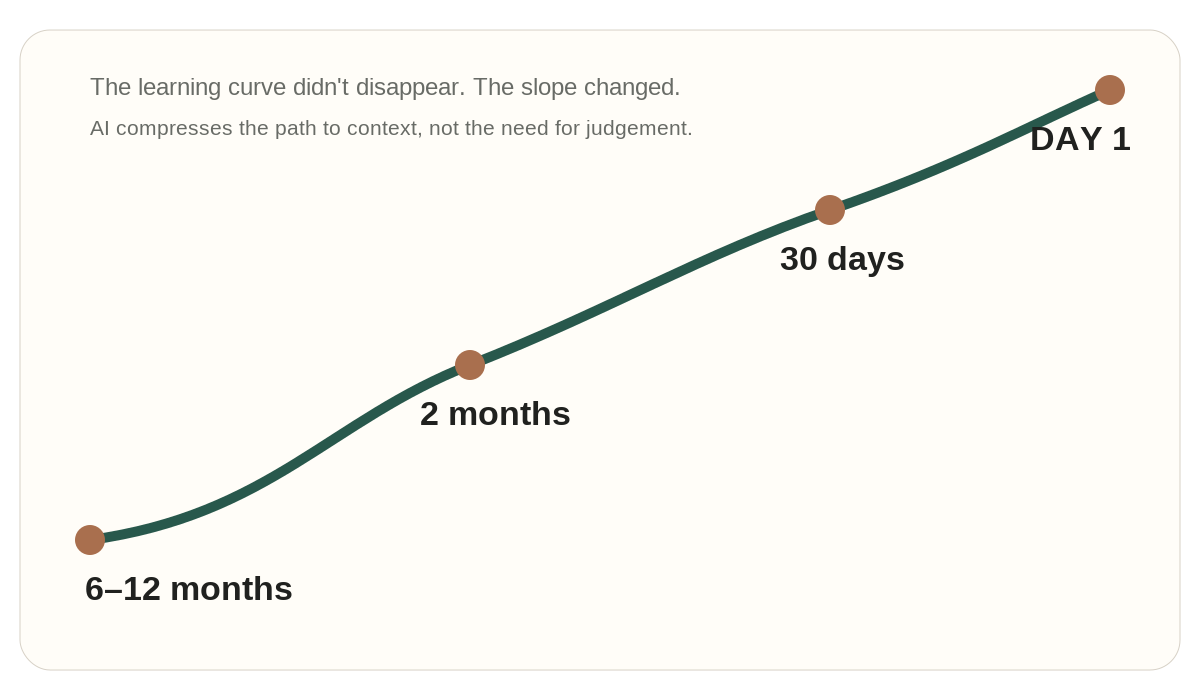
Give me 6–12 months in a new environment and I want to be in the thick of it — understanding the technology, the business, the constraints and the assumptions that have quietly become accepted as fact.
That hasn't changed. What has changed is how quickly I can get there.
I once tried to make the hand-offs between Design, Product, Business and Engineering simpler. The model was straightforward on paper: Business stayed close to the outcomes and KPIs, Product to the workflows, Design to the experience, and Engineering to making the whole thing work. In practice, the idea ran into organisational and political realities and did not get adopted. I still think about that gap between a model that makes sense and one people can actually work within.
I don't see these as clean boxes. The boundaries move depending on the people, the problem and the organisation. Developers often have useful ideas about the experience; design decisions can change the architecture; product choices affect cost and complexity; business priorities can reshape the plan. Meanwhile, the old system still has to run, and the deadline rarely moves just because the problem turned out to be harder than expected.
That is usually the interesting part for me: figuring out which constraint we can change, which one we have to work around, and what trade-off we are actually making. Sometimes the blocker is code. Sometimes it is ownership, incentives or a decision no one wants to reopen.
I've also seen how easy it is to keep polishing a proposal instead of finding out whether it will work in the real world. Not every experiment gives the answer I hoped for, and not every sensible change gets adopted. I don't take that as a reason to stop trying. I try to understand what failed—my assumption, the timing, the design of the change, or the organisation around it—and use that in the next attempt. I would rather learn from a small failure than let the fear of one keep a useful idea untested.
And I tend to change things too.
Understand what actually changed.
Find the real constraint.
Make trade-offs explicit.
Question how work gets done.
Challenge what became “normal”.
Get close. Learn. Have an opinion.
Distributed systems · Cloud · Microservices · Event-driven systems · Search · Data platforms.
Teams · Operating models · Engineering excellence · Delivery · Reliability · Talent.
Retail platforms · B2B commerce · Catalog · Payments · Search · Recommendations.
Generative AI · Agentic systems · AI-assisted development · AIDLC · Governance.
Technology strategy · Platform transformation · Build/buy decisions · Organisational change.
The technology is a means. The business and customer outcome is the point.
Sometimes the constraint is the way the organisation works.
Developers need to participate in design, not simply receive designs. Teams need to move closer to end-to-end ownership. Pods can be created around problems to fast-track delivery and reduce organisational friction.
AI changes this further. How should engineering, design, architecture, delivery and operations work together when AI can compress parts of the traditional lifecycle?
That is a transformation problem as much as a technology problem.
Technology decisions are about the problem, constraints, economics and capability we actually need — not choosing the most fashionable technology.
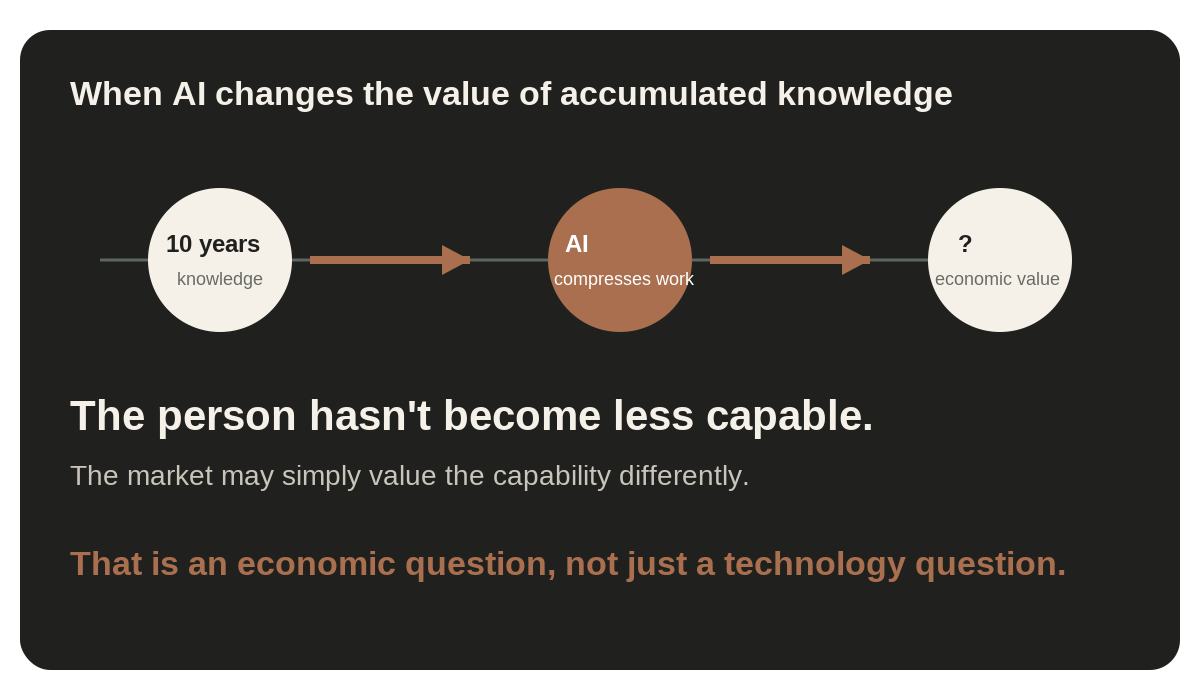
AI is not simply another developer tool. It changes the unit of work, the speed of learning, the role of accumulated knowledge and eventually the operating model around engineering.
Reusable AI capabilities, engineering marketplace and developer enablement.
Governance, responsible AI practices, API security and boundaries around AI-enabled systems.
Agentic workflows, orchestration, autonomous task execution and enterprise use cases.
The first effect isn't necessarily unemployment. It may be insecurity.
Or does lower cost create new demand, new industries and new forms of work?
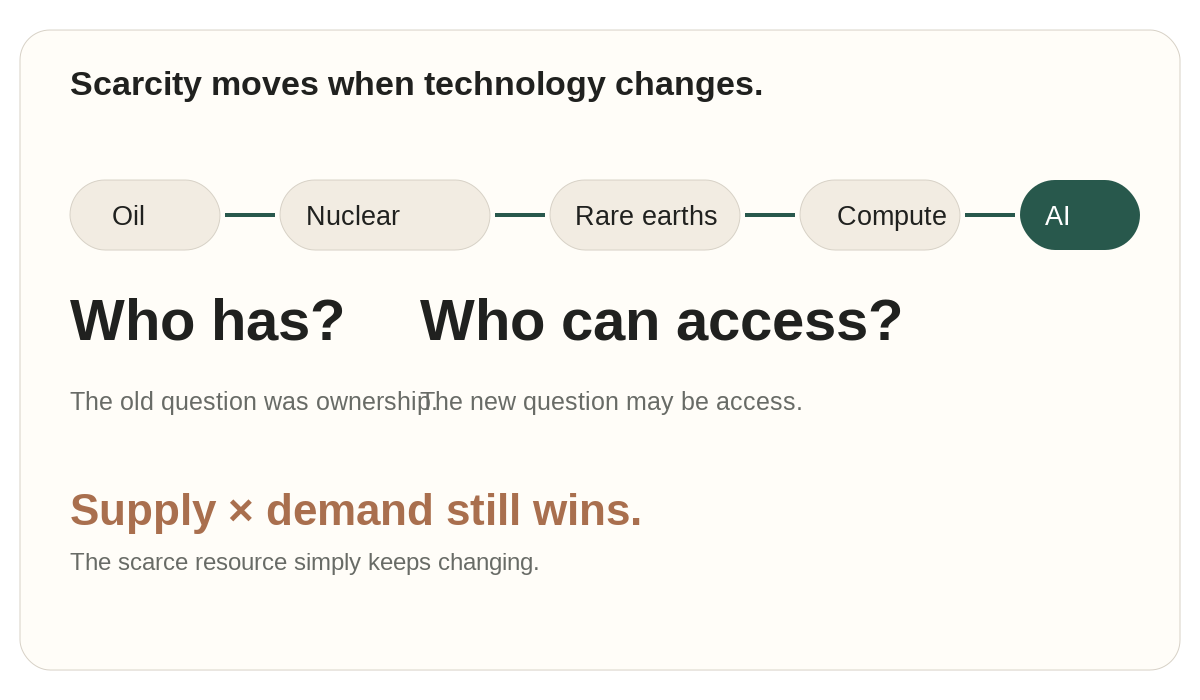
Oil → nuclear materials → rare earths → compute → frontier models.
Every technological revolution changes the scarcity equation.
The question isn't only who has the technology. It's who has access to what the technology still needs.
These aren't projects. They aren't business plans. I don't have answers. That's precisely why I keep thinking about them.
Not simply diagnosis. What could AI change about understanding, monitoring, care and the way we support people when cognition itself becomes fragile?
Joint family → nuclear family → fewer children → more people needing care. If fewer people are available to provide care, companionship and support, what does society build instead?
AI can generate more content than humans can possibly consume. Does the audience eventually become AI itself? If information becomes abundant, does attention become the real scarce resource?
Physics asks whether we can survive there. Economics asks how we allocate what is scarce. Energy, water, food, materials, shelter, transportation, manufacturing and supply chains.
Physics defines the boundaries of what is possible. Economics defines how societies organise scarcity.
This is one I talk about with my son. I encourage him to study physics because survival has constraints, and economics because supply and demand don't disappear just because we move to another planet.
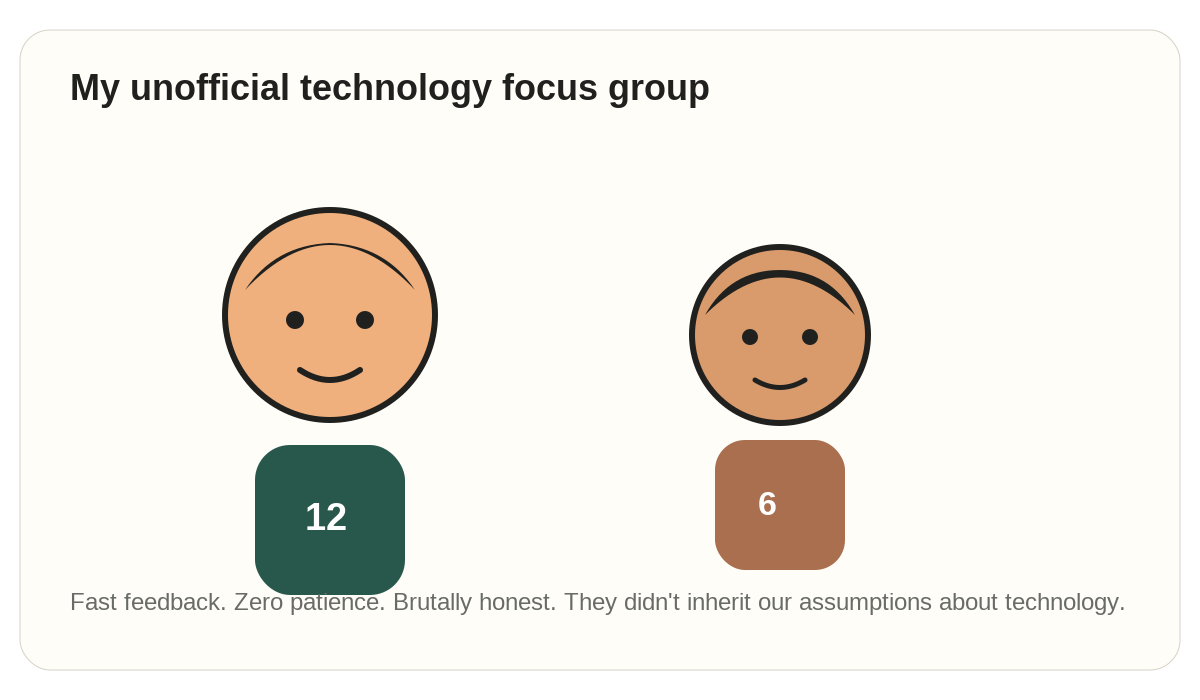
Fast feedback. Zero patience. Brutally honest.
They are growing up in a world where AI isn't a futuristic technology. It's just another interface.
They don't inherit our assumptions about technology. That's useful.
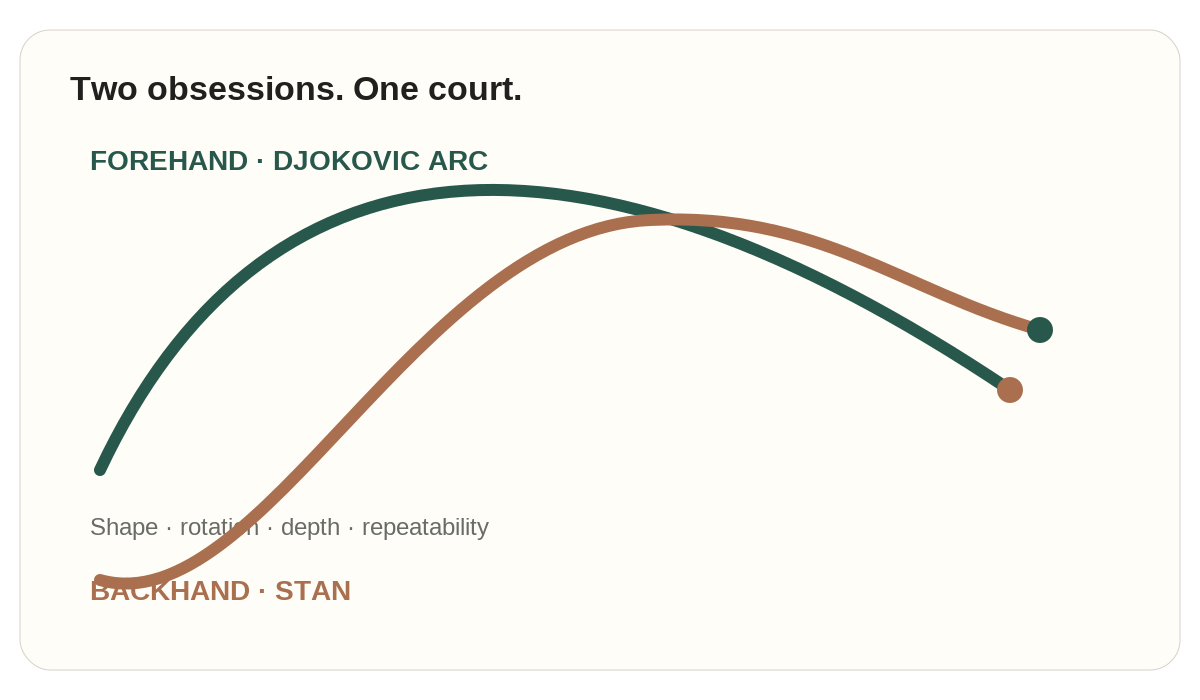
There is a slightly unreasonable amount of thought that goes into tennis.
I tend to notice the same thing in machines that I notice in tennis: how they hold a line when things get interesting.

Pulsar. Polo. Ather. Different machines, different dynamics, same curiosity: what happens at the limit, and why does it feel right when the line is held?
“Recheck.” “One more comparison.” “But what if…?” “Let's look at the architecture.”
Underneath all of this: curiosity, systems thinking, depth, a willingness to enter unfamiliar territory and an almost unreasonable desire to understand how things actually behave.
I don't know what AI will ultimately do to the value of accumulated knowledge. I don't know what happens to an economy when human participation becomes less economically necessary. I don't know what society looks like when fewer people have children and more people need care. I don't know whether AI-generated content will ultimately be consumed mostly by humans or increasingly by AI. I don't know what it would actually take to build a sustainable civilisation on Mars.
I don't know the answers.
I don't know the answer to this one either.
That's not a conclusion. It's an invitation to keep asking.
Engineering, architecture, AI, systems, commerce, economics — or a disagreement worth having.